
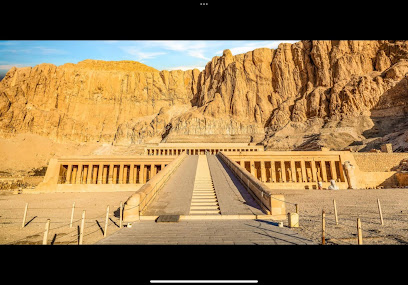
The Mortuary Temple of Hatshepsut at Deir el-Bahari is one of the most elegant monuments on Luxor’s west bank. Built against a dramatic limestone cliff, the temple rises in terraces connected by long ramps, creating a design that feels both monumental and perfectly integrated with the desert landscape. It was built for Queen Hatshepsut, one of the most remarkable rulers of the Eighteenth Dynasty.
Hatshepsut ruled as pharaoh in a period of prosperity and artistic confidence. Her temple expressed her legitimacy, devotion, and achievements. The walls once carried scenes of religious rituals, divine birth, and the famous expedition to Punt, a trading journey that brought exotic goods and prestige to Egypt. These scenes made the temple not only a funerary monument, but also a political and religious statement.
The architecture is closely associated with Senenmut, Hatshepsut’s important official and architect. The clean lines, open terraces, and cliff backdrop make the temple different from many enclosed temple complexes. Visitors can see how the monument was designed to impress from a distance and then reveal more detailed reliefs as they move closer.
Recent archaeological work around Hatshepsut’s temple continues to add interest to the site, including discoveries connected with her valley temple and decorated blocks. For travelers, the temple is best visited as part of a west-bank itinerary with the Valley of the Kings and nearby memorial temples. It is a powerful stop for anyone interested in royal women, ancient propaganda, and the artistry of New Kingdom architecture.