Pyramids Gates
PYRAMIDSGATES
Cities, deserts, and river light

Gates Across Egypt

Home/ Explore Egypt

5 destinations

Cairo
Travel Destination
5 tours

Cairo

Cairo

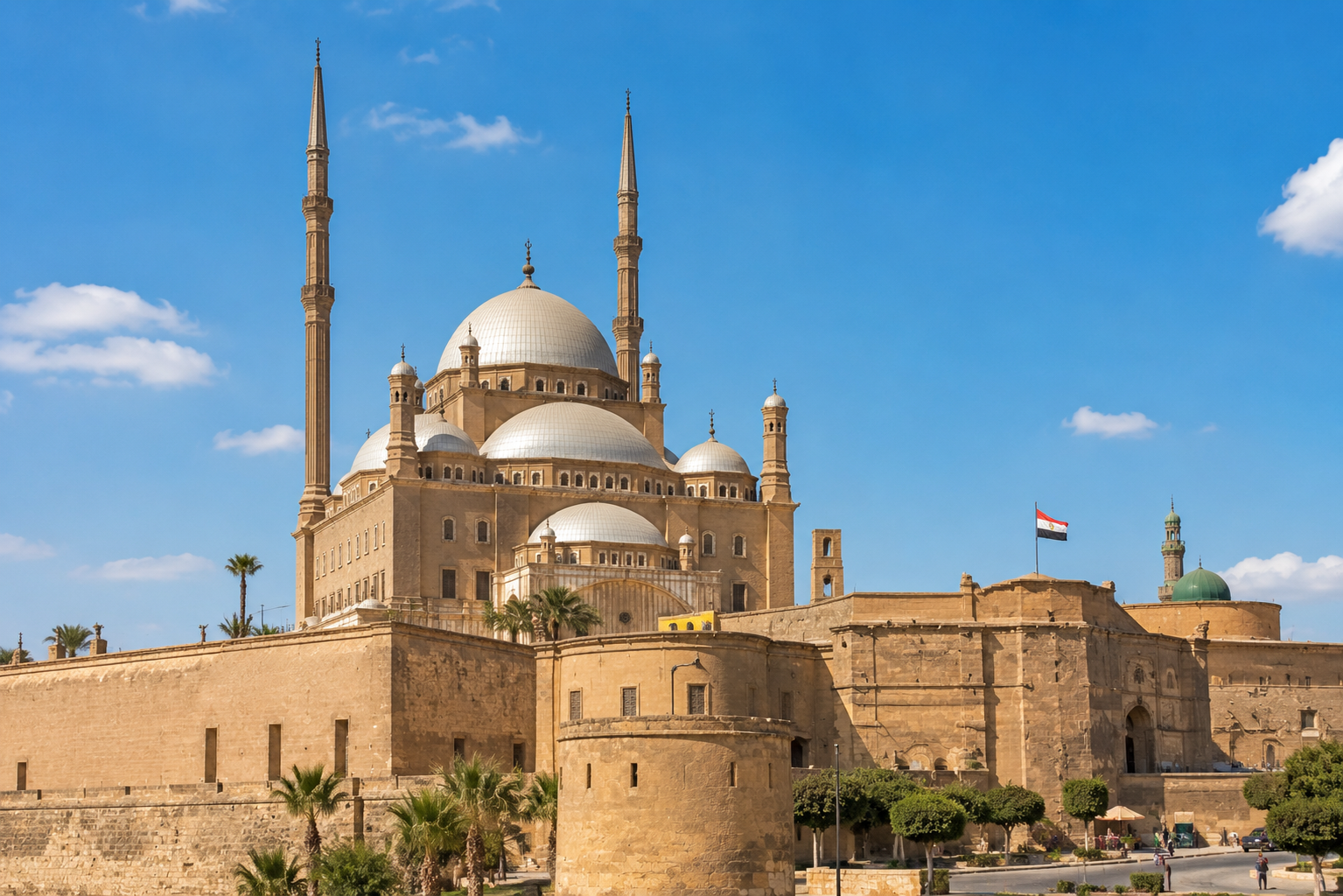
Cairo, Egypt’s sprawling capital, is a vibrant metropolis that seamlessly blends millennia of history with dynamic modern city life. Situated along the banks of the Nile River, it serves as the cultural, political, and historical heart of the nation. The city is home to world-renowned landmarks, including the Egyptian Museum, the medieval Citadel, and the historic Khan el-Khalili bazaar. As a gateway to the nearby Giza Necropolis and countless other monuments, Cairo stands as a premier global travel destination, offering a unique convergence of Pharaonic, Coptic, and Islamic heritage amidst a bustling urban landscape.
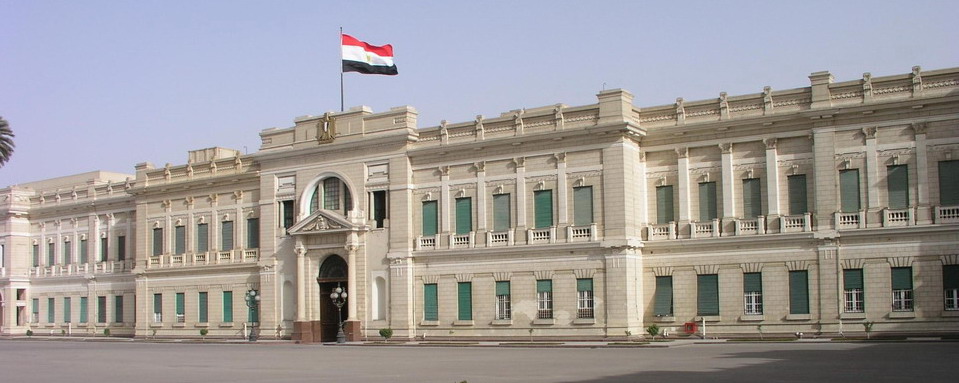
Abdeen Palace Museum
Museum / Palace

Cairo

Abdeen Palace Museum

Abdeen Palace Museum is a historic royal and presidential palace museum complex in central Cairo. Khedive Ismail commissioned the present palace after assuming power in 1863, and its construction was completed in 1874 as part of his plan to create a modern capital inspired by European cities. The palace subsequently served as a principal seat of government during the Muhammad Ali dynasty and became one of Egypt’s presidential palaces after the 1952 revolution. Today, its museum complex preserves collections connected with Egypt’s royal and modern political history, including weapons and ammunition, silverware, medals and decorations, historical documents, and official gifts. Its richly decorated halls, European-influenced architecture, royal furnishings, and historic collections make Abdeen Palace an important monument for understanding Egypt’s political, courtly, and architectural history from the nineteenth century onward.

Aisha Fahmy Palace
Palace

Cairo

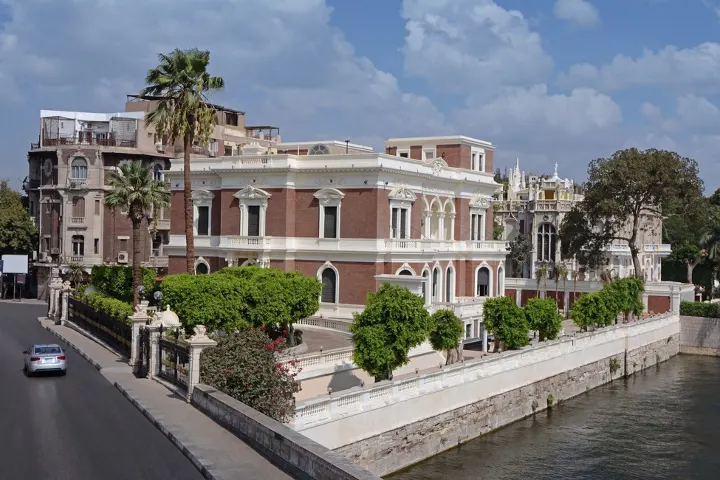
Aisha Fahmy Palace

Aisha Fahmy Palace is a historic palace and arts venue on the Nile in Zamalek, Cairo. Built in 1907 and designed by Italian architect Antonio Lasciac, the building is distinguished by its European classical character, richly decorated interiors, stained glass, ornamental woodwork, and rooms influenced by different artistic traditions, including a notable Japanese-style room. The palace later became closely connected with Egypt’s modern cultural life. It was transferred to the Ministry of Culture in 1958 and subsequently developed as the Arts Complex, hosting major exhibitions and events associated with Egypt’s visual-arts movement. After an extensive restoration, it reopened in May 2017. The building was officially registered as a historic/archaeological building in 2010.

Al Emam El Hussein Mosque
Mosque

Cairo

Al Emam El Hussein Mosque

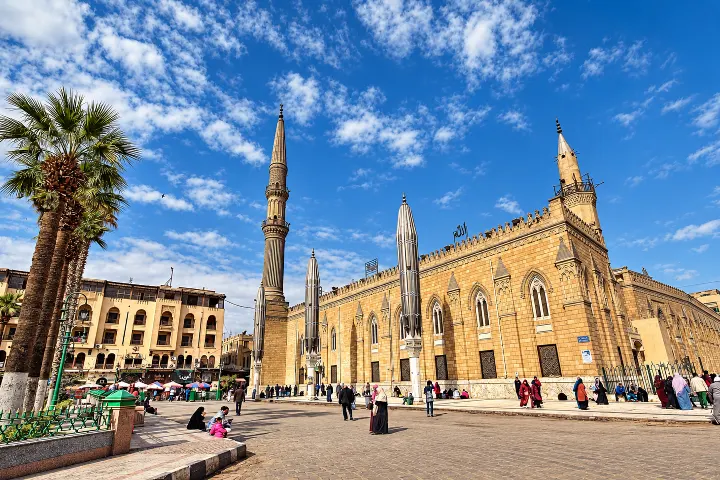
Al Emam El Hussein Mosque is a major historic mosque and religious shrine in Cairo’s Al-Hussein district, beside Khan Al-Khalili and close to Al-Azhar Mosque. The site traces its foundation to the Fatimid period in 549 AH / 1154 CE, when a shrine was established under the supervision of the vizier Al-Salih Tala'i. Egyptian official sources record a long-standing tradition that the shrine contains the head of Imam Hussein ibn Ali, grandson of the Prophet Muhammad; this should be understood as a religious and historical tradition rather than an independently established archaeological fact. The complex underwent major changes over the centuries: Khedive Ismail ordered its reconstruction and enlargement in 1862, the present mosque was completed in 1873, and its Ottoman-style minaret followed in 1878. The mosque remains an important place of worship and a prominent landmark of historic Cairo.

Attraction image 30
Museum

Cairo

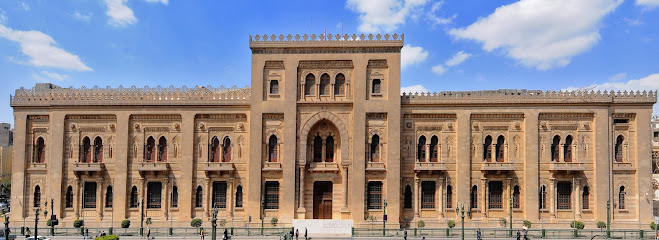
Museum of Islamic Art

A major museum of Islamic art and material culture with collections spanning Egypt and the wider Islamic world.