
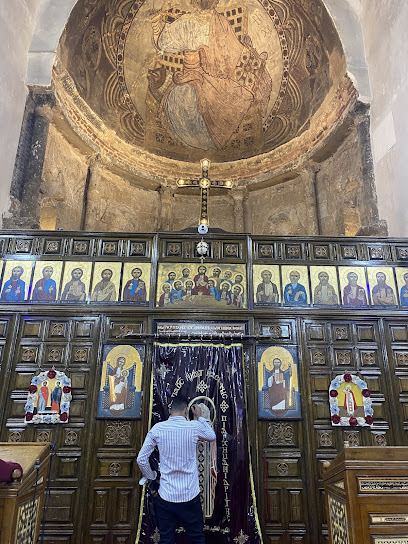
The White Monastery, or Dayr al-Abyaḍ, is one of the landmark Coptic sites of Upper Egypt. Located west of Sohag, it is closely associated with Saint Shenoute and with the development of organized monastic life in Egypt. Its name comes from the white limestone used in its massive outer walls, which give the church a fortress-like presence.
The monastery was part of an important monastic landscape that also included the nearby Red Monastery and other foundations. Yale Egyptology describes the White Monastery as the primary member of a federation connected with the Red Monastery to the north and a women’s foundation to the south at Atripe. This wider context is important because it shows that the site was not isolated; it belonged to a living network of worship, learning, and communal life.
Architecturally, the surviving church is striking. Its heavy walls and reused ancient materials create a powerful link between Pharaonic, Roman, and Coptic Egypt. For visitors, the experience is different from a museum or temple: it is a sacred Christian site with a long spiritual history and continuing religious meaning.
The White Monastery can be combined with the Red Monastery, Sohag National Museum, and Akhmim. For an attraction page, it should be presented as a major Coptic heritage site in Sohag, important for architecture, monastic history, and Egypt’s Christian cultural identity.