
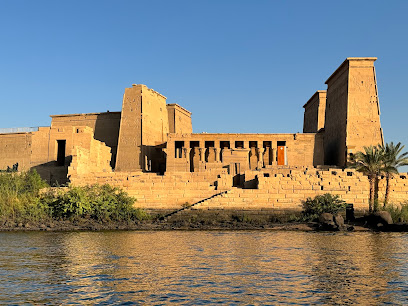
Philae Temple is one of the most atmospheric sites in Aswan. Today it stands on Agilkia Island, reached by boat, but its monuments originally stood on Philae Island near the First Cataract of the Nile. The island setting is part of the magic: water, granite rocks, and temple walls combine to create one of Egypt’s most memorable approaches.
The most important monument at Philae is the Temple of Isis, begun by Ptolemy II Philadelphus in the third century BCE. Isis was one of the most beloved goddesses of ancient Egypt, associated with motherhood, healing, protection, and royal legitimacy through her son Horus. The temple reliefs, courts, birth house, and colonnades show how Egyptian religious traditions continued strongly into the Ptolemaic and Roman periods.
Like Abu Simbel, Philae also has a modern rescue story. The construction of dams at Aswan placed the old island under threat from water. The monuments were eventually dismantled and reassembled on nearby Agilkia Island through an international preservation effort connected with the UNESCO Nubian monuments campaign. This makes a visit to Philae both an ancient religious experience and a modern heritage story.
Philae is ideal for travelers who enjoy beautiful settings as much as history. The boat ride creates a sense of arrival, and the temple’s elegant columns and detailed reliefs are especially photogenic. A guided visit helps explain the mythology of Isis and Horus, the meaning of the birth house, and the reason this sanctuary remained important so late in ancient Egyptian religious history.