Geographical Context & The Ancient Memphis Necropolis
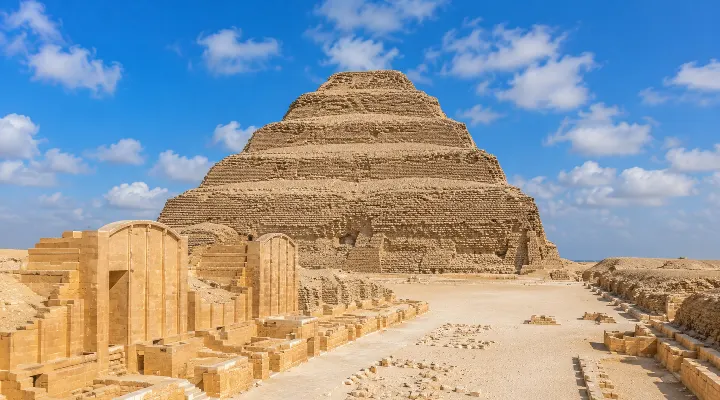
The Giza Plateau sits on the western edge of the Nile Valley, elevated roughly 60 meters above the surrounding floodplain at the boundary of the Libyan Desert. Geographically, Giza forms the northernmost component of the vast ancient Memphis Necropolis, a designated UNESCO World Heritage site stretching over 30 kilometers from Giza southwards through Abusir, Saqqara, and Dahshur to Meidum. During the Old Kingdom period, particularly the Fourth Dynasty (c. 2613–2494 BCE), this elevated limestone plateau was selected by Pharaonic rulers as the monumental burial site for royal dynasties, strategic due to its proximity to the ancient capital of Memphis (Ineb-Hedj).
The geographical positioning served both practical and theological imperatives. Economically and logistically, the Nile's annual inundation enabled the transport of limestone blocks from Tura on the east bank and granite from Aswan via seasonal canals right to the base of the plateau. Spiritually, the west bank of the Nile was intrinsically linked in ancient Egyptian cosmology to the setting sun (Amenti), representing the realm of the dead and the journey toward rebirth in the afterlife. By establishing their mortuary complexes on this prominent rocky promontory, Fourth Dynasty pharaohs created an enduring sacred landscape that physically and symbolically bridged the terrestrial capital of Memphis with the eternal solar realm.
The Great Pyramid of Khufu (Cheops): Engineering Peak
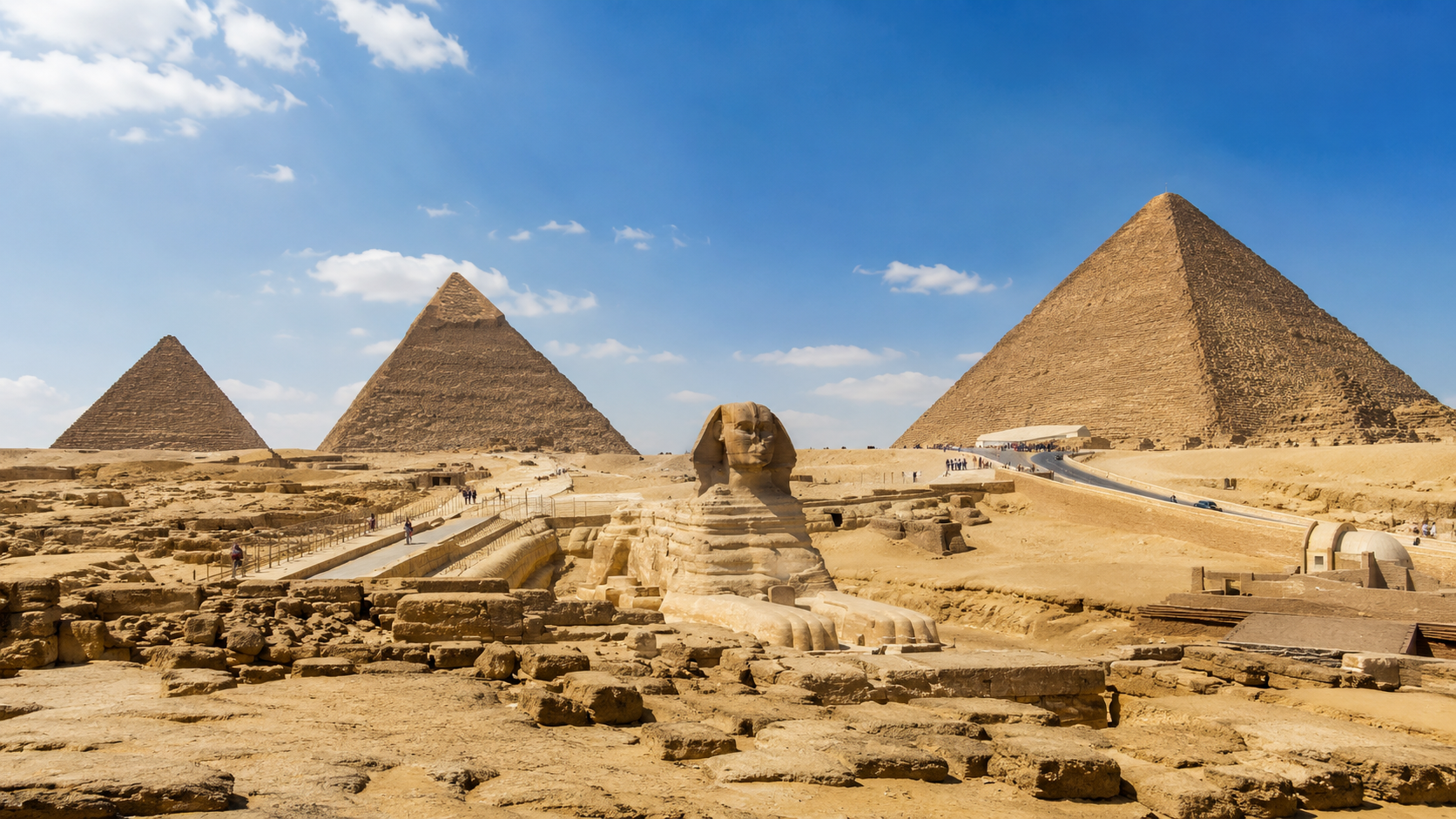
The Great Pyramid of Khufu, known classically as the Pyramid of Cheops, represents the apex of ancient Egyptian monumental architecture and remains the oldest and largest of the three major pyramids on the Giza Plateau. Commissioned during the 26th century BCE by Pharaoh Khufu, the second ruler of the Fourth Dynasty, the structure originally stood at an astonishing height of 146.6 meters (481 feet), making it the tallest man-made structure in the world for over 3,800 years. Composed of an estimated 2.3 million limestone and granite blocks weighing an average of 2.5 tons each, the pyramid demonstrates unprecedented precision, aligned almost perfectly to true cardinal north with an accuracy margin of less than one-fifteenth of a degree.
Architecturally, Khufu’s pyramid is unique among Egyptian pyramids for its complex internal layout constructed high within the masonry core rather than purely underground. The interior architecture features three main chambers: the lowermost Subterranean Chamber carved directly into the bedrock, the Queen’s Chamber, and the monumental Grand Gallery—a corbelled vault measuring nearly 47 meters long and 8.5 meters high leading directly to the central King’s Chamber. Constructed entirely of massive red granite blocks imported from Aswan, the King’s Chamber houses an empty monolithic sarcophagus and is crowned by five stress-relieving chambers designed to distribute the immense weight of the overlying stone. As the sole surviving monument of the Seven Wonders of the Ancient World, the Great Pyramid remains an enduring testament to ancient Egyptian mathematics, astronomy, and structural engineering.
The Pyramid of Khafre & The Valley Temple
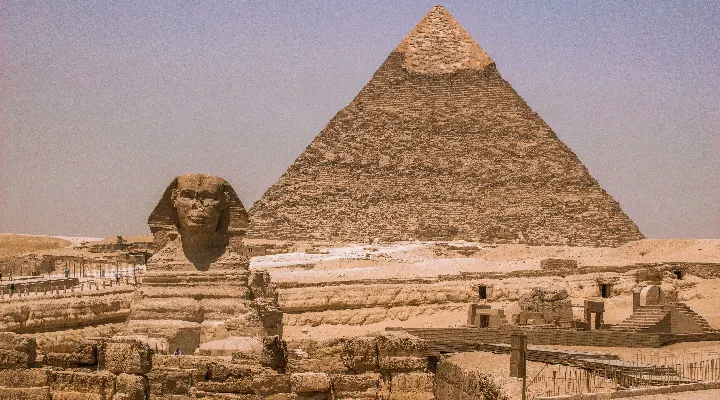
The Pyramid of Khafre (Chephren), built for the son of Khufu and fourth pharaoh of the Fourth Dynasty, is the second-largest pyramid constructed on the Giza Plateau. Reaching an original height of 143.5 meters (471 feet), it appears visually taller than the adjacent Great Pyramid due to its placement on a bedrock base elevated ten meters higher. Khafre's pyramid is distinctly recognizable by the remaining casing stones of fine Tura limestone preserved around its apex.
The mortuary complex of Khafre features one of the best-preserved ancient religious structures in Egypt: the monumental Valley Temple, located at the eastern end of a paved causeway. Constructed with massive local limestone core blocks faced with monoliths of polished red granite from Aswan, the Valley Temple contains a T-shaped pillared hall paved with alabaster. It was within this sacred space that royal purification and mummification rituals were performed, and where twenty-three statues of Khafre carved from diorite—including the celebrated seated statue depicting the king protected by the falcon god Horus—were originally installed.
The Pyramid of Menkaure & The Queen Pyramids
The Pyramid of Menkaure (Mycerinos), built for the fifth ruler of the Fourth Dynasty, is the smallest of the three major pyramids on the Giza Plateau, standing at an original height of 65.5 meters (215 feet). Despite its reduced scale compared to its predecessors, the monument exhibits remarkable architectural ambition through its extensive use of imported red granite from Aswan, which encases the lower sixteen courses of the pyramid base—a casing left partially unpolished due to the king's premature death. A prominent historical mark on its northern face is a deep vertical gash created in 1196 CE during an unsuccessful attempt by Sultan Al-Aziz Uthman, son of Saladin, to demolish the Giza pyramids. Inside, the complex features intricate subterranean chambers where explorer Howard Vyse discovered Menkaure's ornate basalt sarcophagus in 1837, which was subsequently lost at sea off the coast of Spain when the transport ship Beatrice sank in 1838.
Extending along the southern flank of Menkaure's pyramid stand three smaller subsidiary structures designated as G3-a, G3-b, and G3-c, traditionally referred to as the Pyramids of the Queens. Constructed of stepped limestone masonry, these structures served as burial monuments for royal consorts, including Queen Khamerernebty II. Together with their associated mortuary and valley temples, where celebrated triad statues depicting Menkaure alongside the goddess Hathor and personified Egyptian nomes were unearthed, the complex highlights the evolving religious and artistic sophistication of late Fourth Dynasty funerary architecture.
The Great Sphinx: Architecture, Restoration & Symbolism
The Great Sphinx of Giza, positioned directly east of Khafre’s pyramid complex, is the largest monolithic sculpture from the ancient world. Carved directly out of a natural outcrop of the Giza Plateau's limestone bedrock, the monument measures approximately 73 meters (240 feet) in length and 20 meters (66 feet) in height. Traditionally attributed to Pharaoh Khafre of the Fourth Dynasty (c. 2558–2532 BCE), the statue depicts a recumbent lion with the head of a king wearing the royal nemes headdress and uraeus cobra emblem. The colossal sculpture synthesizes the physical power of the lion with the divine authority and intellect of the pharaoh, acting as a divine guardian for the sacred necropolis.
Throughout history, the Sphinx has undergone numerous phases of burial, rediscovery, and restoration due to environmental exposure and the soft, layered composition of its limestone bedrock. Between its paws stands the celebrated Dream Stele (Stele of Thutmose IV), erected during the New Kingdom (c. 1400 BCE) to record Prince Thutmose’s divine dream in which the Sphinx promised him the throne of Egypt in exchange for clearing the encroaching desert sands. In modern times, conservation projects conducted by Egyptian archaeological authorities have focused on restoring degraded limestone blocks, monitoring ambient microclimates, and controlling groundwater levels to preserve the monument.
Khufu Solar Boat & Ancient Royal Barques
In 1954, Egyptian archaeologist Kamal el-Mallakh made one of the most extraordinary archaeological discoveries of the twentieth century: an intact, disassembled ancient wooden vessel buried in a sealed stone pit along the southern face of the Great Pyramid of Khufu. Constructed primarily of imported Lebanese cedar wood, the solar barque consisted of 1,224 individual pieces carefully arranged in thirteen layers. The vessel was meticulously reassembled over two decades by master conservator Ahmed Youssef Moustafa without using metallic nails, relying instead on wooden pegs and hemp ropes. Measuring 43.6 meters (143 feet) in length and 5.9 meters in width, it stands as the oldest, largest, and best-preserved wooden vessel from antiquity.
In ancient Egyptian religious cosmology, solar barques (mesektet and mandjet) served a profoundly symbolic purpose, enabling the deceased pharaoh to traverse the heavens alongside the sun god Ra during his daily cycle across the sky and nocturnal journey through the underworld (Duat). A second sealed boat pit adjacent to the first was excavated in subsequent decades through a joint Egyptian-Japanese mission, revealing another well-preserved solar barque. In August 2021, Khufu’s primary solar boat was safely transported from its longstanding museum building on the Giza Plateau to a custom-built wing at the Grand Egyptian Museum (GEM) utilizing a high-tech, remote-controlled smart transporter to ensure its long-term preservation.
Heit el-Ghurab: The Lost City of the Pyramid Builders
South of the Great Sphinx and the Giza Plateau wall lies Heit el-Ghurab ("The Wall of the Crow"), an ancient urban settlement dating to the mid-to-late Fourth Dynasty (reigns of Khafre and Menkaure). Excavated extensively by the Ancient Egypt Research Associates (AERA), led by Dr. Mark Lehner, this site exposed the working-class infrastructure that made pyramid construction possible. Far from being an ad-hoc encampment for slaves, Heit el-Ghurab was a planned, highly organized state-run city complete with worker barracks (galleries), administrative centers, bakeries, breweries, and slaughterhouses capable of housing and feeding a workforce estimated between 10,000 and 20,000 individuals at any given time.
Faunal and botanical remains recovered from the site reveal that workers enjoyed a high-protein diet rich in young cattle, sheep, goat, and Nile fish, alongside large-scale production of emmer wheat bread and beer. Adjacent to the settlement, bioarchaeological analysis of skeletons in the workers' cemetery demonstrates that laborers received advanced medical care for the era, including setting broken bones and performing trepanation. These findings systematically dismantled the long-standing historical myth that the Giza Pyramids were built by enslaved labor, proving instead that they were constructed by a skilled, well-nourished national workforce organized through a rotation system of state service (corvée labor).
The Grand Egyptian Museum (GEM): A Modern Gateway
Located just two kilometers from the Giza Pyramids, the Grand Egyptian Museum (GEM) is the world's largest archaeological museum complex dedicated to a single civilization. Spanning over 500,000 square meters, the state-of-the-art facility was designed by the Dublin-based firm Heneghan Peng Architects following an international competition. The building's architectural layout is defined by a translucent alabaster facade and visual sightlines that align directly with the apexes of the Great Pyramids of Khufu and Khafre, establishing a physical and symbolic connection between modern museum architecture and ancient Pharaonic monuments.
The museum houses a unprecedented collection of more than 100,000 artifacts spanning thousands of years of Egyptian history. Its central highlight is the complete collection of Pharaoh Tutankhamun, comprising over 5,000 items exhibited together in their entirety for the first time since Howard Carter’s 1922 discovery. Visitors enter through a monumental atrium dominated by the 3,200-year-old colossal statue of Ramesses II, leading to the Grand Staircase—a multi-tiered exhibition gallery showcasing royal statuary, architectural elements, and sarcophagi organized chronologically. The staircase ascends toward glass galleries that offer panoramic vistas of the Giza Plateau, positioning the GEM as a transformative bridge between ancient heritage and 21st-century museology.
Sound and Light Show & Cultural Events
The Sound and Light Show at the Giza Pyramids is one of Egypt's most established cultural nocturnal experiences, operating continuously since 1961. Set against the illuminated backdrop of the Great Sphinx and the Pyramids of Khufu, Khafre, and Menkaure, the performance utilizes dramatic lighting, sound effects, and theatrical narration to recount the history of Ancient Egypt, the construction of the monuments, and the legacies of the pharaohs. Available in multiple languages via wireless audio systems, the show provides visitors with an immersive historical overview beneath the night sky.
In addition to the traditional light show, the Giza Plateau and surrounding modern venues regularly host high-profile international cultural events, contemporary art exhibitions (such as the annual "Forever Is Now" organized by Art D'Égypte), and world-class musical performances. These events bridge ancient heritage with contemporary global culture, utilizing the timeless architecture of the pyramids as an dynamic, open-air backdrop for artistic expression.
Practical Visitor Information for Exploring Giza
Visiting the Giza Plateau requires practical planning to navigate the expansive archaeological site effectively. The main plateau site is open daily to visitors, typically from 7:00 AM to 5:00 PM during summer and 8:00 AM to 4:00 PM in winter, though ticketing hours may vary during Ramadan. Access to the interior chambers of the Great Pyramid of Khufu, the Pyramid of Khafre, and the Pyramid of Menkaure requires separate combination tickets, which have limited daily capacity to control humidity and preservation levels. Visitors should note that entering the pyramids involves navigating narrow, steep, and non-air-conditioned ascending passages, which may not be suitable for claustrophobic individuals or those with limited mobility.
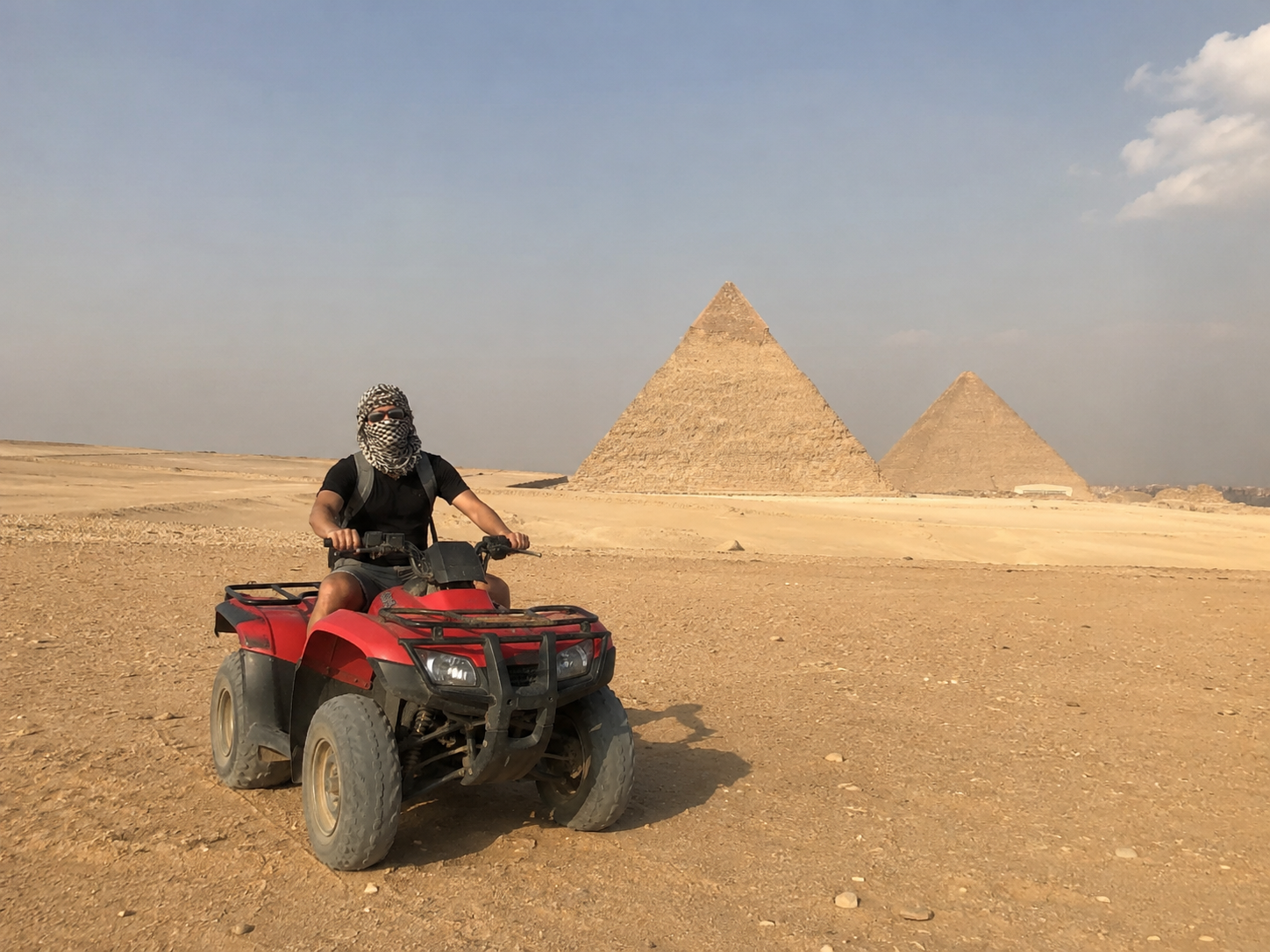
The Giza Plateau is accessible from central Cairo and neighboring districts via taxi, ride-hailing services, tour buses, or the Cairo Metro (stopping at Giza Station followed by a short taxi ride). The opening of the nearby Grand Egyptian Museum (GEM) offers streamlined transit connections between the museum complex and the archaeological zone. Essential advice for visitors includes wearing comfortable walking shoes, carrying adequate sun protection and drinking water, hiring licensed guides through official channels, and adhering strictly to regulations regarding climbing on ancient masonry or touching delicate relief carvings. Photography is generally permitted across the plateau, with specific guidelines enforced inside pyramid interiors and enclosed tomb structures.