
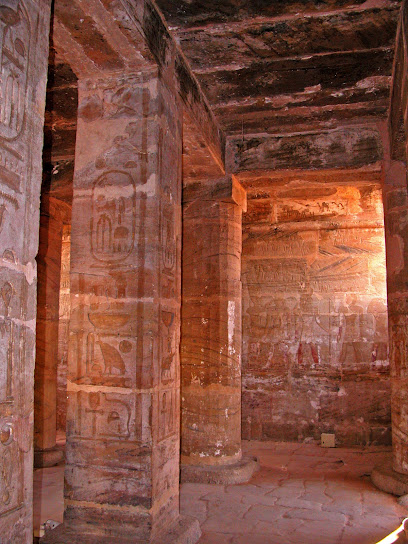
Temple of Amada is one of the quiet masterpieces of Lake Nasser. Built in the New Kingdom during the 18th Dynasty, it is among the oldest surviving Egyptian temples in Nubia. Unlike the huge drama of Abu Simbel, Amada rewards slow looking: compact halls, crisp reliefs, royal inscriptions, and a calm lakeside setting that makes the journey feel like a private encounter with ancient Nubia.
The temple was dedicated to Amun-Re and Re-Horakhty and was worked on by rulers including Thutmose III, Amenhotep II, and later kings. Its walls preserve military and devotional scenes, but the real surprise is the freshness of some reliefs. The building was later converted into a church; plaster helped cover and protect parts of the ancient decoration, leaving unusual details for modern visitors to admire.
Like many Nubian monuments, Amada was threatened by the rising waters created by the Aswan High Dam. It was moved during the international rescue campaign that also saved temples from Abu Simbel to Philae. Today it is best understood as part of the wider Lake Nasser heritage route: remote, atmospheric, and excellent for travelers who want more than the classic Nile itinerary.