
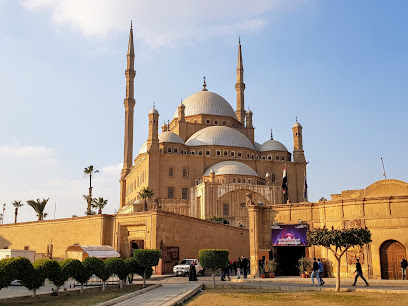
The Saladin Citadel of Cairo is one of the most impressive medieval fortifications in Egypt and a landmark of Islamic Cairo. Built on the Muqattam Hills, it commands a wide view over the city and explains why the location was chosen for defense and government. Construction began under Salah al-Din al-Ayyubi in the twelfth century and the citadel later became the seat of power for successive rulers.
For nearly seven centuries, the Citadel played a central role in Egyptian political life. It was not only a military fortress; it was a royal residence, administrative center, and symbol of authority. Over time, different rulers added mosques, palaces, gates, walls, and service buildings, turning the site into a layered complex rather than a single monument.
The most famous building inside the Citadel today is the Mosque of Muhammad Ali Pasha, whose Ottoman-style domes and minarets dominate Cairo’s skyline. The mosque was built in the nineteenth century and gives the complex one of its most recognizable silhouettes. Other parts of the Citadel reveal earlier periods, including medieval defensive works and museums that help visitors understand the site’s long history.
A visit to the Citadel is valuable for both history and views. From its terraces, Cairo spreads out below, connecting the medieval city, modern neighborhoods, and distant landmarks. It is an essential stop for travelers interested in Islamic architecture, military history, and the story of Cairo as a capital city shaped by dynasties, armies, and reformers.