
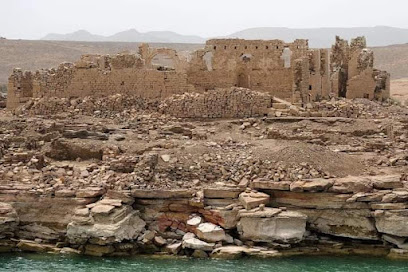
Qasr Ibrim is one of the most evocative names in Lower Nubia. Once a fortified settlement on a high bluff above the Nile, it now appears as an island rising from Lake Nasser. Its isolation gives it a dramatic presence, but its importance is not only scenic. Qasr Ibrim preserves layers of Egyptian, Nubian, Christian, and Islamic history in one compact archaeological landscape.
The site was important because of its strategic position overlooking river routes between Egypt and Nubia. Over centuries it was associated with temples, churches, administrative buildings, fortifications, and a remarkable archive of texts. Scholars value Qasr Ibrim because it has produced evidence for medieval Nubian life and contacts between Christian Nubia and Islamic Egypt.
Most travelers see Qasr Ibrim from the water during Lake Nasser cruises, because the archaeological island is generally not visited freely. Even from a distance, it helps visitors understand how the lake transformed the Nubian landscape. Qasr Ibrim is not just a ruin; it is a memory of frontier politics, river trade, faith, and survival.