
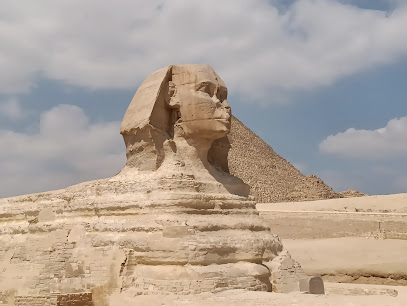
The Great Sphinx of Giza is one of the most recognizable monuments in the world and one of the essential stops on the Giza Plateau. Carved directly from limestone bedrock, it shows a reclining lion’s body with a human head, a form that expressed royal power and protection in ancient Egyptian belief. The Sphinx faces east and stands near the valley temple area of Khafre’s pyramid complex, which is why many scholars connect it with the Old Kingdom and the royal landscape of the Fourth Dynasty.
Its impact comes from both mystery and presence. Unlike the pyramids, which rise upward in geometric clarity, the Sphinx seems to emerge from the earth itself. Weathering, restoration, and centuries of sand have all become part of its story. Travelers often come for the classic photograph with the pyramids behind it, but the monument deserves more than a quick stop. It is a key to understanding how kingship, animal symbolism, solar orientation, and sacred architecture worked together at Giza.
A strong attraction detail page should explain what the Sphinx is, how it relates to the pyramid fields, and how to visit it responsibly. The best light is often early morning or late afternoon, and the surrounding viewing areas can become crowded, so patience helps. Pair the Sphinx with the Giza Necropolis, Khafre Valley Temple, the Solar Boat story, and the Grand Egyptian Museum for a complete day. For many visitors, this is the moment Egypt becomes real: stone, desert, legend, and history in one unforgettable image.